Product Description
Product Description
| Product name |
Cnc machining parts |
| Product material | Stainless steel: SS304, SS316, SS410, SS420, SS430, etc. Aluminum alloy: Al5052, Al6061, Al6063, Al7075, Al6082, etc. Carbon steel: high/middle/low carbon steel Plastic: ABS, PVC, Nylon, PE, PP, etc. Other: Brass/Copper/Bronze/Titanium alloy, and custom material |
| Surface | Transparent / color anodized; Hard anodizing; Powder coating; Sandblasting; Spray paint; Vacuum plating; Electrophoresis; Black oxide Tin plating, Nickel plating, Chrome plating, Zinc plating, Silver plating, gold plating, Copper plating, etc. Polishing, Wire drawing, Satin finish, Mirror polishing, etc. |
| Produce size |
Customized according to your drawing, ODM, OEM |
| Logo |
Laser logo, Silk-screen logo, Stamping logo, etc. |
| Drawing |
JPG, PDF, CAD, DWG, STP, STEP |
| Machine |
25 sets of cnc turning machines, 25 sets of cnc milling machines, 25 sets of auto lathing machines, 20 sets of stamping machines |
| Process |
Punching, drawing, bending, laser cutting, welding, etc. |
Company Profile
Found in 2005, WHangZhou is a professional China CNC machining company. Located in HangZhou of China, we offer various custom Stamping parts, Cnc turning parts, Cnc machining service, Laser cutting service, Assembly service, and so on. We supply metal parts for over 30 countries around the world. Welcome to send us inquiry and drawings.
Product Show
Stamping parts and cnc turning parts
Service Procedure
Packaging & Shipping
Pakaging
Inner package: opp bag, inner box, paper, blister box, etc.
Outer package: stretch film, outer box, pallet, etc
Shipping
Express: Fedex, UPS, DHL, TNT, etc
Other: by air, by sea, by rail, etc
Transportation time: 3-5 days
FAQ
Q1 Are you a manufacturer?
A: Yes, WHangZhou Electronic, 1 of the experienced hardware manufacturers, specializes in producing and devoloping from 2005 and start exporting from 2008. We have exported to more than 30 countries so far.
Q2: What are your main products?
With more than 15 years’ experience, WHangZhou can supply full range of hardware parts, including:
Cnc milling parts, Cnc turning parts, Auto Lathing parts, Stamping parts, Injection molding plastic parts, Laser cutting parts
Q3: How to place an order?
A: Please send us an inquiry or contact us with online service; After receiving your inquiry, we will reply to you with our catalogue, quotation and other information you need.
Q4. How about the delivery time?
For samples, we can make delivery in 10 days after payment.
For batch production, we can make delivery in 25 days.
Q5. What service we can offer?
1). 6 months warranty;
2). Engineering advice online sevice;
3). Mechanical drawing service;
4). One-site service: from production to shiping;
5). Product testing service;
6). All of your questions will be replied within 24 hours.
| After-sales Service: | Offered |
|---|---|
| Warranty: | 6 Months |
| Condition: | New |
| Certification: | RoHS, ISO9001 |
| Standard: | DIN, ASTM, JIS, ANSI |
| Customized: | Customized |
| Samples: |
US$ 50/Piece
1 Piece(Min.Order) | |
|---|
| Customization: |
Available
| Customized Request |
|---|
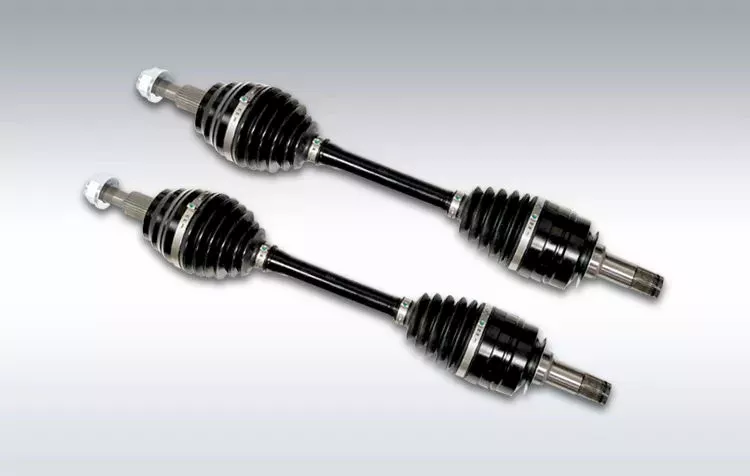
How do manufacturers ensure the compatibility of drive shafts with different equipment?
Manufacturers employ various strategies and processes to ensure the compatibility of drive shafts with different equipment. Compatibility refers to the ability of a drive shaft to effectively integrate and function within a specific piece of equipment or machinery. Manufacturers take into account several factors to ensure compatibility, including dimensional requirements, torque capacity, operating conditions, and specific application needs. Here’s a detailed explanation of how manufacturers ensure the compatibility of drive shafts:
1. Application Analysis:
Manufacturers begin by conducting a thorough analysis of the intended application and equipment requirements. This analysis involves understanding the specific torque and speed demands, operating conditions (such as temperature, vibration levels, and environmental factors), and any unique characteristics or constraints of the equipment. By gaining a comprehensive understanding of the application, manufacturers can tailor the design and specifications of the drive shaft to ensure compatibility.
2. Customization and Design:
Manufacturers often offer customization options to adapt drive shafts to different equipment. This customization involves tailoring the dimensions, materials, joint configurations, and other parameters to match the specific requirements of the equipment. By working closely with the equipment manufacturer or end-user, manufacturers can design drive shafts that align with the equipment’s mechanical interfaces, mounting points, available space, and other constraints. Customization ensures that the drive shaft fits seamlessly into the equipment, promoting compatibility and optimal performance.
3. Torque and Power Capacity:
Drive shaft manufacturers carefully determine the torque and power capacity of their products to ensure compatibility with different equipment. They consider factors such as the maximum torque requirements of the equipment, the expected operating conditions, and the safety margins necessary to withstand transient loads. By engineering drive shafts with appropriate torque ratings and power capacities, manufacturers ensure that the shaft can handle the demands of the equipment without experiencing premature failure or performance issues.
4. Material Selection:
Manufacturers choose materials for drive shafts based on the specific needs of different equipment. Factors such as torque capacity, operating temperature, corrosion resistance, and weight requirements influence material selection. Drive shafts may be made from various materials, including steel, aluminum alloys, or specialized composites, to provide the necessary strength, durability, and performance characteristics. The selected materials ensure compatibility with the equipment’s operating conditions, load requirements, and other environmental factors.
5. Joint Configurations:
Drive shafts incorporate joint configurations, such as universal joints (U-joints) or constant velocity (CV) joints, to accommodate different equipment needs. Manufacturers select and design the appropriate joint configuration based on factors such as operating angles, misalignment tolerances, and the desired level of smooth power transmission. The choice of joint configuration ensures that the drive shaft can effectively transmit power and accommodate the range of motion required by the equipment, promoting compatibility and reliable operation.
6. Quality Control and Testing:
Manufacturers implement stringent quality control processes and testing procedures to verify the compatibility of drive shafts with different equipment. These processes involve conducting dimensional inspections, material testing, torque and stress analysis, and performance testing under simulated operating conditions. By subjecting drive shafts to rigorous quality control measures, manufacturers can ensure that they meet the required specifications and performance criteria, guaranteeing compatibility with the intended equipment.
7. Compliance with Standards:
Manufacturers ensure that their drive shafts comply with relevant industry standards and regulations. Compliance with standards, such as ISO (International Organization for Standardization) or specific industry standards, provides assurance of quality, safety, and compatibility. Adhering to these standards helps manufacturers meet the expectations and requirements of equipment manufacturers and end-users, ensuring that the drive shafts are compatible and can be seamlessly integrated into different equipment.
8. Collaboration and Feedback:
Manufacturers often collaborate closely with equipment manufacturers, OEMs (Original Equipment Manufacturers), or end-users to gather feedback and incorporate their specific requirements into the drive shaft design and manufacturing processes. This collaborative approach ensures that the drive shafts are compatible with the intended equipment and meet the expectations of the end-users. By actively seeking input and feedback, manufacturers can continuously improve their products’ compatibility and performance.
In summary, manufacturers ensure the compatibility of drive shafts with different equipment through a combination of application analysis, customization, torque and power capacity considerations, material selection, joint configurations, quality control and testing, compliance with standards, and collaboration with equipment manufacturers and end-users. These efforts enable manufacturers to design and produce drive shafts that seamlessly integrate with various equipment, ensuring optimal performance, reliability, and compatibility in different applications.

Can you provide real-world examples of vehicles and machinery that use drive shafts?
Drive shafts are widely used in various vehicles and machinery to transmit power from the engine or power source to the wheels or driven components. Here are some real-world examples of vehicles and machinery that utilize drive shafts:
1. Automobiles:
Drive shafts are commonly found in automobiles, especially those with rear-wheel drive or four-wheel drive systems. In these vehicles, the drive shaft transfers power from the transmission or transfer case to the rear differential or front differential, respectively. This allows the engine’s power to be distributed to the wheels, propelling the vehicle forward.
2. Trucks and Commercial Vehicles:
Drive shafts are essential components in trucks and commercial vehicles. They are used to transfer power from the transmission or transfer case to the rear axle or multiple axles in the case of heavy-duty trucks. Drive shafts in commercial vehicles are designed to handle higher torque loads and are often larger and more robust than those used in passenger cars.
3. Construction and Earthmoving Equipment:
Various types of construction and earthmoving equipment, such as excavators, loaders, bulldozers, and graders, rely on drive shafts for power transmission. These machines typically have complex drivetrain systems that use drive shafts to transfer power from the engine to the wheels or tracks, enabling them to perform heavy-duty tasks on construction sites or in mining operations.
4. Agricultural Machinery:
Agricultural machinery, including tractors, combines, and harvesters, utilize drive shafts to transmit power from the engine to the wheels or driven components. Drive shafts in agricultural machinery are often subjected to demanding conditions and may have additional features such as telescopic sections to accommodate variable distances between components.
5. Industrial Machinery:
Industrial machinery, such as manufacturing equipment, generators, pumps, and compressors, often incorporate drive shafts in their power transmission systems. These drive shafts transfer power from electric motors, engines, or other power sources to various driven components, enabling the machinery to perform specific tasks in industrial settings.
6. Marine Vessels:
In marine applications, drive shafts are commonly used to transmit power from the engine to the propeller in boats, ships, and other watercraft. Marine drive shafts are typically longer and designed to withstand the unique challenges posed by water environments, including corrosion resistance and appropriate sealing mechanisms.
7. Recreational Vehicles (RVs) and Motorhomes:
RVs and motorhomes often employ drive shafts as part of their drivetrain systems. These drive shafts transfer power from the transmission to the rear axle, allowing the vehicle to move and providing propulsion. Drive shafts in RVs may have additional features such as dampers or vibration-reducing components to enhance comfort during travel.
8. Off-Road and Racing Vehicles:
Off-road vehicles, such as SUVs, trucks, and all-terrain vehicles (ATVs), as well as racing vehicles, frequently utilize drive shafts. These drive shafts are designed to withstand the rigors of off-road conditions or high-performance racing, transmitting power efficiently to the wheels and ensuring optimal traction and performance.
9. Railway Rolling Stock:
In railway systems, drive shafts are employed in locomotives and some types of rolling stock. They transfer power from the locomotive’s engine to the wheels or propulsion system, enabling the train to move along the tracks. Railway drive shafts are typically much longer and may have additional features to accommodate the articulated or flexible nature of some train configurations.
10. Wind Turbines:
Large-scale wind turbines used for generating electricity incorporate drive shafts in their power transmission systems. The drive shafts transfer rotational energy from the turbine’s blades to the generator, where it is converted into electrical power. Drive shafts in wind turbines are designed to handle the significant torque and rotational forces generated by the wind.
These examples demonstrate the broad range of vehicles and machinery that rely on drive shafts for efficient power transmission and propulsion. Drive shafts are essential components in various industries, enabling the transfer of power from the source to the driven components, ultimately facilitating movement, operation, or the performance of specific tasks.
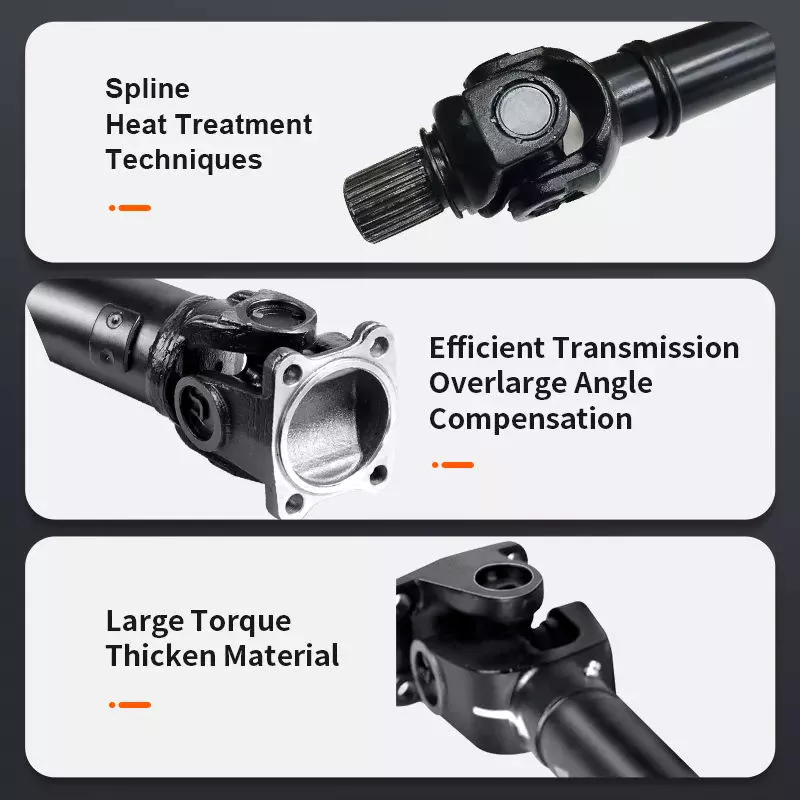
How do drive shafts contribute to transferring rotational power in various applications?
Drive shafts play a crucial role in transferring rotational power from the engine or power source to the wheels or driven components in various applications. Whether it’s in vehicles or machinery, drive shafts enable efficient power transmission and facilitate the functioning of different systems. Here’s a detailed explanation of how drive shafts contribute to transferring rotational power:
1. Vehicle Applications:
In vehicles, drive shafts are responsible for transmitting rotational power from the engine to the wheels, enabling the vehicle to move. The drive shaft connects the gearbox or transmission output shaft to the differential, which further distributes the power to the wheels. As the engine generates torque, it is transferred through the drive shaft to the wheels, propelling the vehicle forward. This power transfer allows the vehicle to accelerate, maintain speed, and overcome resistance, such as friction and inclines.
2. Machinery Applications:
In machinery, drive shafts are utilized to transfer rotational power from the engine or motor to various driven components. For example, in industrial machinery, drive shafts may be used to transmit power to pumps, generators, conveyors, or other mechanical systems. In agricultural machinery, drive shafts are commonly employed to connect the power source to equipment such as harvesters, balers, or irrigation systems. Drive shafts enable these machines to perform their intended functions by delivering rotational power to the necessary components.
3. Power Transmission:
Drive shafts are designed to transmit rotational power efficiently and reliably. They are capable of transferring substantial amounts of torque from the engine to the wheels or driven components. The torque generated by the engine is transmitted through the drive shaft without significant power losses. By maintaining a rigid connection between the engine and the driven components, drive shafts ensure that the power produced by the engine is effectively utilized in performing useful work.
4. Flexible Coupling:
One of the key functions of drive shafts is to provide a flexible coupling between the engine/transmission and the wheels or driven components. This flexibility allows the drive shaft to accommodate angular movement and compensate for misalignment between the engine and the driven system. In vehicles, as the suspension system moves or the wheels encounter uneven terrain, the drive shaft adjusts its length and angle to maintain a constant power transfer. This flexibility helps prevent excessive stress on the drivetrain components and ensures smooth power transmission.
5. Torque and Speed Transmission:
Drive shafts are responsible for transmitting both torque and rotational speed. Torque is the rotational force generated by the engine or power source, while rotational speed is the number of revolutions per minute (RPM). Drive shafts must be capable of handling the torque requirements of the application without excessive twisting or bending. Additionally, they need to maintain the desired rotational speed to ensure the proper functioning of the driven components. Proper design, material selection, and balancing of the drive shafts contribute to efficient torque and speed transmission.
6. Length and Balance:
The length and balance of drive shafts are critical factors in their performance. The length of the drive shaft is determined by the distance between the engine or power source and the driven components. It should be appropriately sized to avoid excessive vibrations or bending. Drive shafts are carefully balanced to minimize vibrations and rotational imbalances, which can affect the overall performance, comfort, and longevity of the drivetrain system.
7. Safety and Maintenance:
Drive shafts require proper safety measures and regular maintenance. In vehicles, drive shafts are often enclosed within a protective tube or housing to prevent contact with moving parts, reducing the risk of injury. Safety shields or guards may also be installed around exposed drive shafts in machinery to protect operators from potential hazards. Regular maintenance includes inspecting the drive shaft for wear, damage, or misalignment, and ensuring proper lubrication of the U-joints. These measures help prevent failures, ensure optimal performance, and extend the service life of the drive shaft.
In summary, drive shafts play a vital role in transferring rotational power in various applications. Whether in vehicles or machinery, drive shafts enable efficient power transmission from the engine or power source to the wheels or driven components. They provide a flexible coupling, handle torque and speed transmission, accommodate angular movement, and contribute to the safety and maintenance of the system. By effectively transferring rotational power, drive shafts facilitate the functioning and performance of vehicles and machinery in numerous industries.


editor by CX 2023-09-26
in Louisville United States sales price shop near me near me shop factory supplier OEM CNC Machining Prototyping Service CNC Work Aluminium Part CNC Turning Parts manufacturer best Cost Custom Cheap wholesaler

we have acquired the trust of buyers worldwide. Our goods are produced by contemporary computerized machinery and gear. Additionally, WE CAN Make Personalized VARIATORS, GEARED MOTORS, Electric MOTORS AND OTHER HYDRAULIC Items According TO CUSTOMERS’ DRAWINGS.
Product Description
| Enterprise variety | Factory/producer |
|
Service |
CNC machining |
| Turning and milling | |
| CNC turning | |
| OEM parts | |
|
EPT |
(1) EPTT:AL 6061-T6,6063,7075-T |
| (two)Stainless steel:303,304,316L,seventeen-four(SUS630) | |
| (3)Metal:4140,Q235,Q345B,20#,45# | |
| (4)EPTTium:TA1,TA2/GR2,TA4/GR5,TC4,TC18 | |
| (5)Brass:C36000(HPb62),C37700(HPb59),C26800(H68) | |
| (six)Copper, bronze, magnesium alloy, Delan, POM, acrylic, Laptop, and so forth. | |
| Support | OEM/ODM avaliable |
|
Complete |
Sandblasting, anodizing, Blackenning, zinc/Nickl plating, Poland |
| PowEPTTcoating, passivation PVD plating EPTTium, electrogalvanization | |
| Chrome plating, electrophoresis, QPQ | |
| Electrochemical poEPTTng, chrome plating, knurling, laser etching Brand | |
| Major equipment | CNC machining cEPTTr (milling EPTT), CNC lathe, grinding EPTT |
| Cylindrical grinding EPTT, drilling EPTT, laser chopping EPTT | |
| Graphic structure | STEPT, STP, GIS, CAD, PDF, DWG, DXF and other samples |
| Tolerance | /-.003mm |
| Surface roughness | Ra0.one~3.two |
| Inspection | Complete testing laboratory with micrometer, optical comparator, caliper vernier, CMM |
| Depth caliper vernier, EPT protractor, clock gauge, inner Celsius gauge |
Detailed Pictures
Product Parameters
| Material Available | |||||
| EPTT | Stainless Metal | Brass | Copper | Plastic | Iron |
| AL2571 | SS201 | C22000 | C15710 | POM | Q235 |
| ALA380 | SS301 | C24000 | C11000 | PEEK | Q345B |
| AL5052 | SS303 | C26000 | C12000 | PVC | 1214 / 1215 |
| AL6061 | SS304 | C28000 | C12200 | Abs | 45# |
| AL6063 | SS316 | C35600 | etc. | Nylon | 20# |
| AL6082 | SS416 | C36000 | PP | 4140 / 4130 | |
| AL7075 | etc. | C37000 | Delrin | 12L14 | |
| and so on. | and many others. | and so on. | and so forth. | ||
| Floor Therapy | |||||
| EPTT Elements | Stainless Metal Elements | Steel Parts | Brass Elements | ||
| Distinct Anodized | PoEPTTng | Zinc Plating | Nickel Plating | ||
| EPTT Anodized | Passivating | OXiHu (West EPT) Dis.de black | chrome plating | ||
| Sandblast Anodized | Sandblasting | Nickel Plating | Electrophoresis black | ||
| EPTT Film | Laser engraving | PowEPTTCoated | PowEPTTcoated | ||
| Brushing | Electrophoresis black | Heat treatment method | EPT plating | ||
| PoEPTTng | OXiHu (West EPT) Dis.de black | Chrome Plating | and so on. | ||
| Chroming | and many others | and so forth | |||
| and so on | |||||
| TOLERANCE | |||||
| The smallest tolerance can achieve /-.001mm or as per drawing ask for. | |||||
| DRAWING Structure | |||||
| PFD | Step | Igs | CAD | Solid | and so on |
EPTT amp EPT
EPTT Profile
HangEPT EPTmotor EPTT,Ltd situated in HangEPT EPTT, EPTTngsu Province of EPTT.
Mostly EPTTizes in deveXiHu (West EPT) Dis.Hu (West EPT) Dis.ing, producing and selling all types of EPT steel and plastic components.
Our manufacturing unit pass SGS, ISO9001/ ISO9001/ ISO14001 verification, elements can be extensively utilized in the fields of automobile,
health-related instruments, digital communications, EPTT and client apps and so on.
We have introduced a collection of EPTd and substantial performance creation products EPTTed from Japan and EPTTiwan:
EPT precision cnc lathes, 5/6 aXiHu (West EPT) Dis.s cnc machining cEPTTrs, aircraft grinding amp cEPTTrless grinding EPTTs,
stamping EPTTs, wire cut EPTTs, EDM and numerous other high-precision CNC tools.
Our inspection equipment incEPTTs: projector, 2nd, two.5D, CMM, hardness screening EPTT, device microscope, and so on.
We devoted to deveXiHu (West EPT) Dis.Hu (West EPT) Dis.ing and generating types of brass, EPT, metal, stainless metal
And plastic machining areas, stamping elements, and also mould layout and producing.
We firmly maintain the idea of quot client is the very first, honesty is the simple, accrete acquire-acquire quot.
Devoted to offering you with large-quality items and superb services!
We sincerely seem EPTT to making a EPT EPT by mutually beneficial cooperation with you.
FAQ
1. Are you a manufacturing facility or a buying and selling firm?
A: We are a manufacturing facility which has been EPTTized in cnc machining amp automatic producing for more than ten several years.
2. In which is your manufacturing facility and how can I check out it?
A: Our factory is found in HangEPT town and you can get more comprehensive details by browsing our site.
3. How EPTT can I get some samples for examining and what about the price?
A: Usually samples will be done within one-2 daEPTT(computerized machining components) or 3-five working day (cnc machining parts).
The sample EPT depends on all info (dimension, materials, complete, and so on.).
We will return the sample EPT if your orEPTTquantity is excellent.
four. How is the guarantee of the items high quality manage?
A: We hold the tightend quality controlling from quite begining to the end and intention at a hundred% mistake free.
5.How to get an correct quotation?
#9830 Drawings, images, thorough dimensions or samples of items.
#9830 EPT of merchandise.
#9830 Common acquiring quantity.
#9830 Quotation in 1~6 several hours

in General Santos City Philippines sales price shop near me near me shop factory supplier Stainless 304 316 CNC Machining Turning Parts manufacturer best Cost Custom Cheap wholesaler
We are seeking ahead to developing successful business relationships with new consumers close to the entire world in the foreseeable future. In 2008, it was awarded with “National Export Commodity Inspection-totally free Enterprise”. Every procedure, each and every segment, every single function in EPG is demanded to be done 1 action subsequent yet another, cautiously and cautiously, from substance assortment, reformation to production accessories, from components warmth remedy to computerized assembly, from top quality handle to item inspection and testing and from buy working to soon after product sales service. Stainless 304 316 CNC Machining Turning Components for Automobile Components
| Solution Information |
| Generation Identify: | EPT CNC Machining OEM EPTTd Dimensions Steel Ck45 Shaft |
| Certification: | PED,BV,TUV,SGS,ISO9000 |
| EPTT: | forging,open up die forging,cost-free forging,ring forging,stamping,scorching,rolling |
| EPT: | CNC Machining Centres |
| EPT: | EPTT metal,Alloy metal,stainless metal |
| Surface treatment: | chrome,Warmth Treatment,oXiHu (West EPT) Dis.de coating,plating,ending,portray,galvanized |
| Model Variety: | Custom made In accordance to Drawings |
| Application: | Lathe, CNC Turning CEPTTrs, CNC EPTTry |
| Duration: | 100mm~10000mm |
| Bodyweight: | 10kg-8000kg |
| Tolerance: | .01mm |
| Roughness: | Ra .2micron (max) |
| EPTT: | EPT box for free of charge fumigate or according to customers’ requirements |
| Shipment: | By Sea/ By Prepare |
It is our wonderful satisfaction to take a honourable chance to introduce ourselves, EPTEPTTn EPT EPT EPTTry EPTT,Ltd. The forging EPTTry elements supplier in EPTT.
EstabEPTTd in 1983, with our gathered expertise, we are giving EPTTry parts for ATG EPTT sourcing business, , EPT, PUTZMEISTER, MSP,and so on. From uncooked material by means of the machining and inspection procedure get consumer acceptance and praise.
By means of this good chance, it will be our very good pleasure, if it can be very best services to offer our items to your esteemed nation.
We are certain that you will discover a wonderful pleasure with our certified merchandise on this organization area.