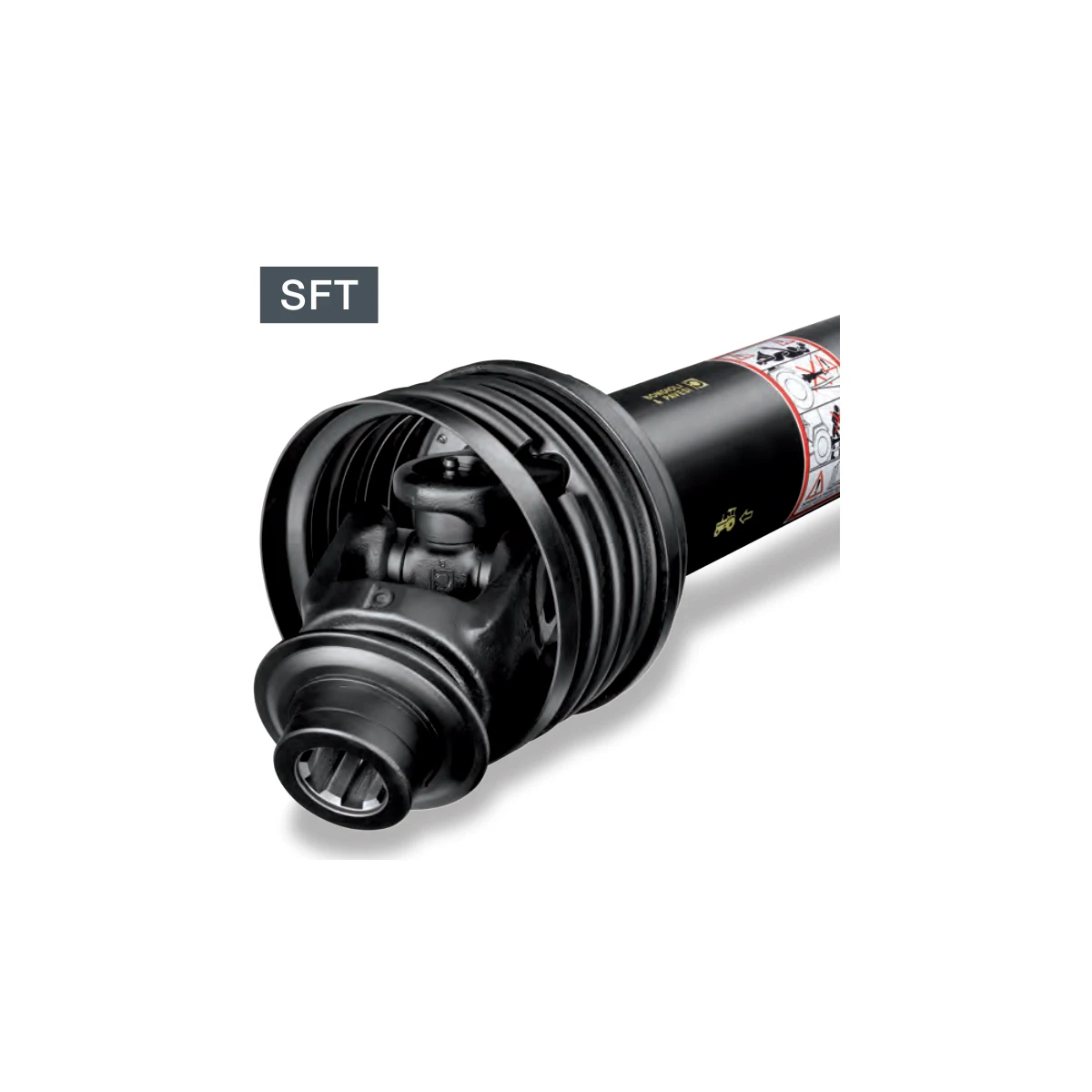
Standard Agricultural PTO Drive Shaft SFT
Use this family when the tractor and implement remain close to an aligned working position and a conventional U-joint driveline is suitable. Select by transmitted power, actual operating angle, shaft length, telescoping overlap, end-yoke interfaces and the implement duty cycle.
View technical evidence and selection notes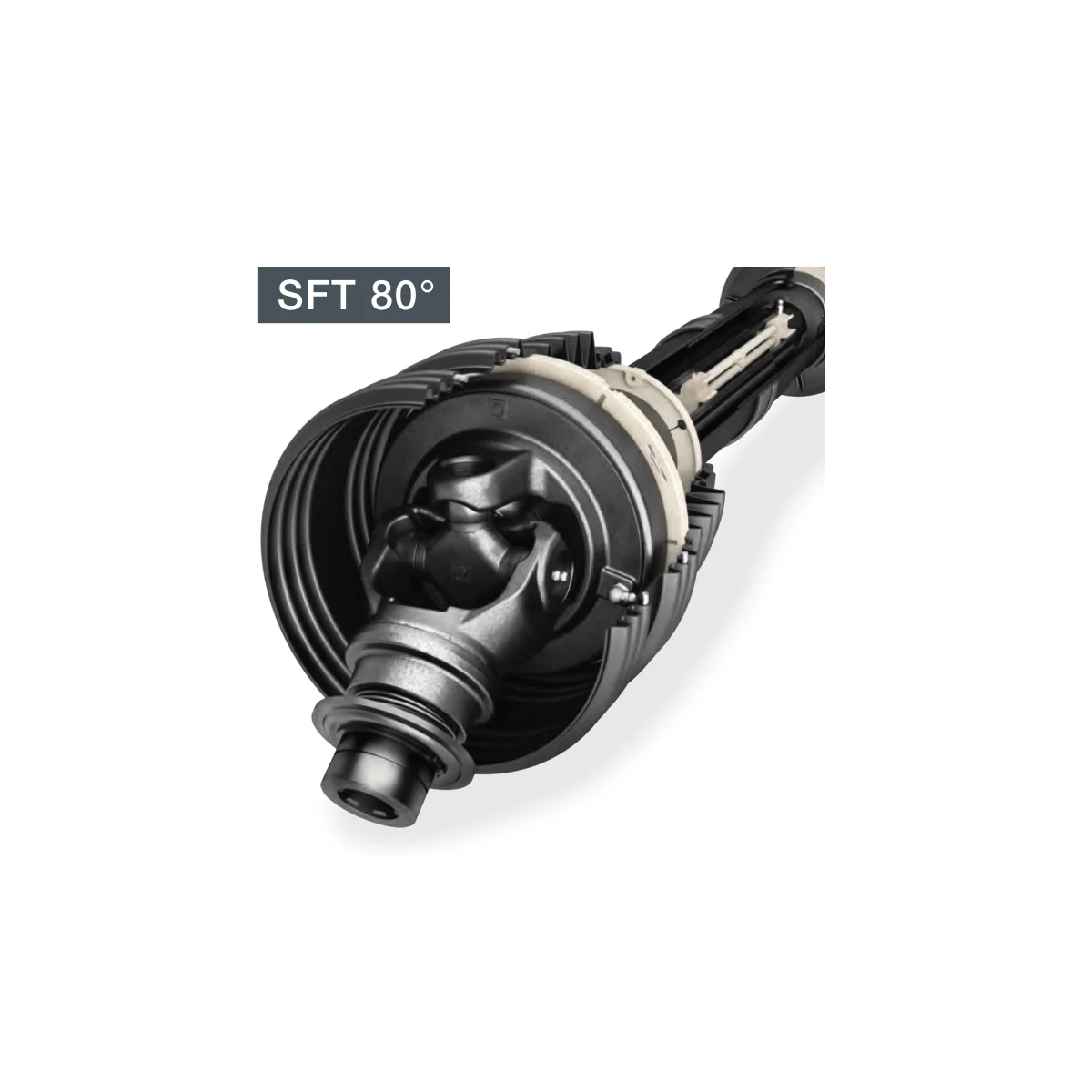
80 Degree Wide-Angle CV PTO Drive Shaft SFT 80
Choose a wide-angle CV arrangement when the tractor and implement must turn sharply while power transmission continues. Confirm which end carries the CV head, the maximum steering geometry, the normal running angle and whether the implement-side single joint remains within its recommended continuous angle.
View technical evidence and selection notes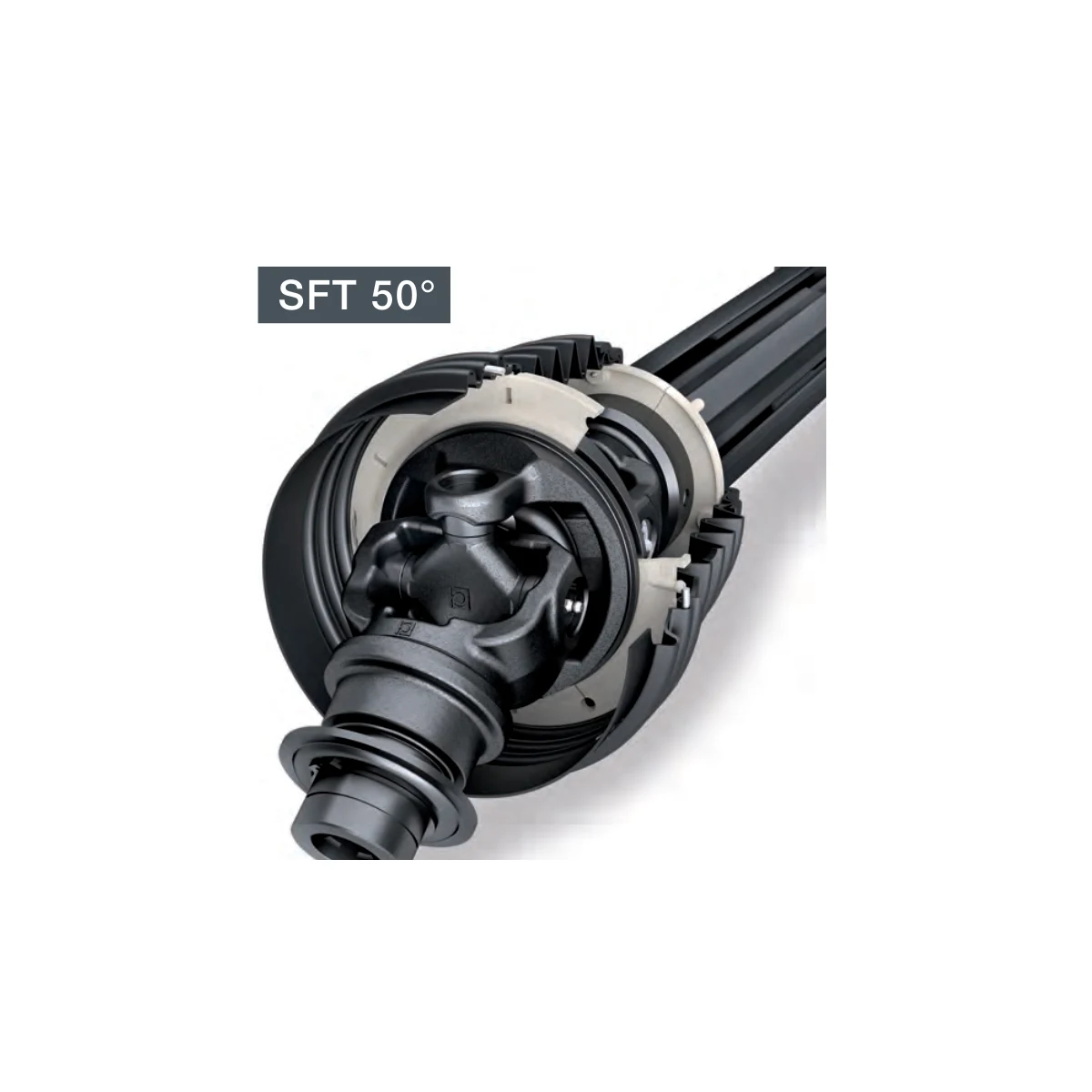
50 Degree Wide-Angle CV PTO Drive Shaft SFT 50
This family supports applications that need more articulation than a conventional single-joint shaft but do not require the full 80 degree manoeuvring envelope. The correct choice still depends on torque, operating speed, geometry, overlap, end connections and guard clearance.
View technical evidence and selection notes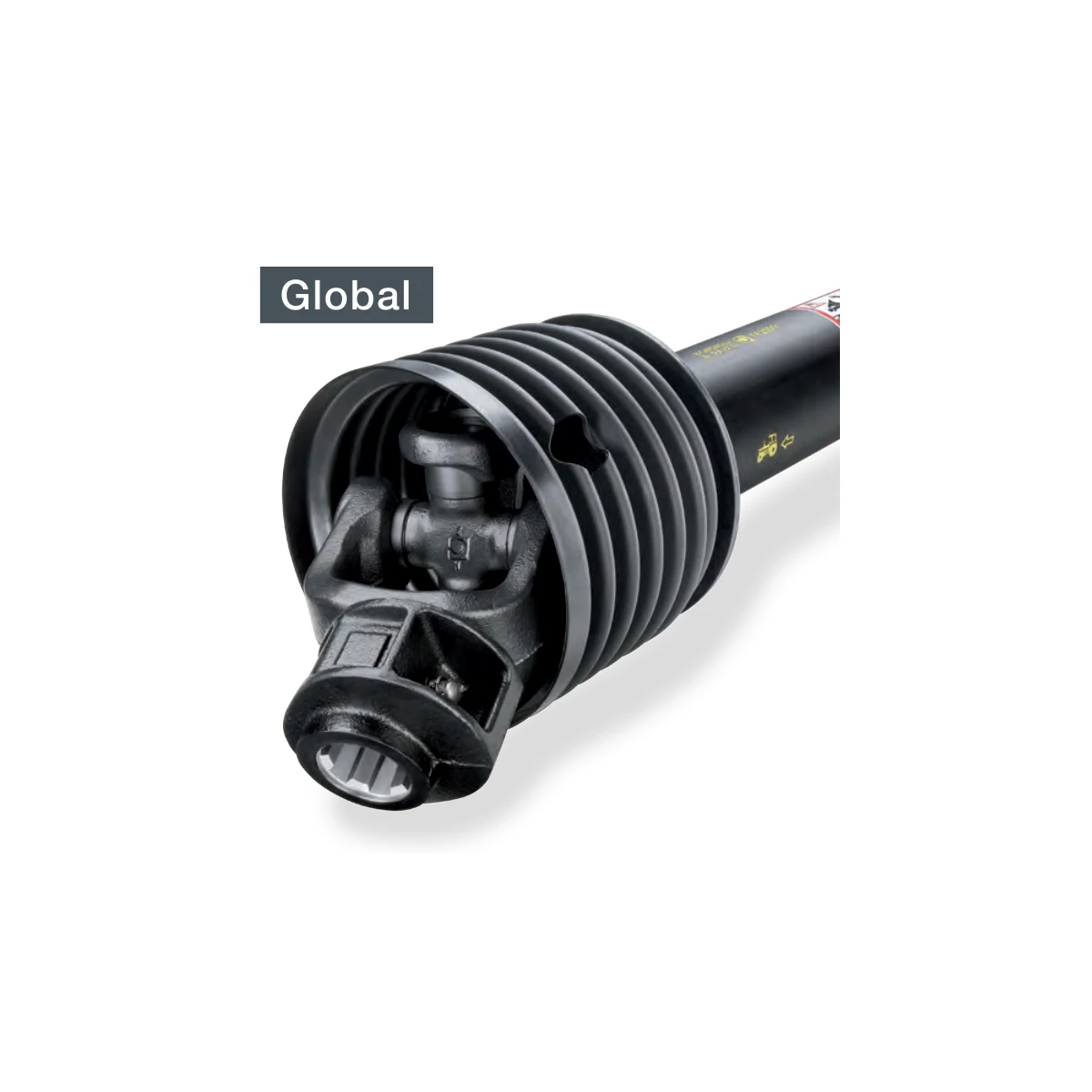
Standard Triangle-Tube PTO Drive Shaft Global
The Global family is presented as a reliable, lower-weight driveline range with simplified maintenance. Select the telescoping profile around torque, sliding under load and required extension. Splined telescoping members are the more appropriate reference when frequent loaded sliding or longer extension is involved.
View technical evidence and selection notes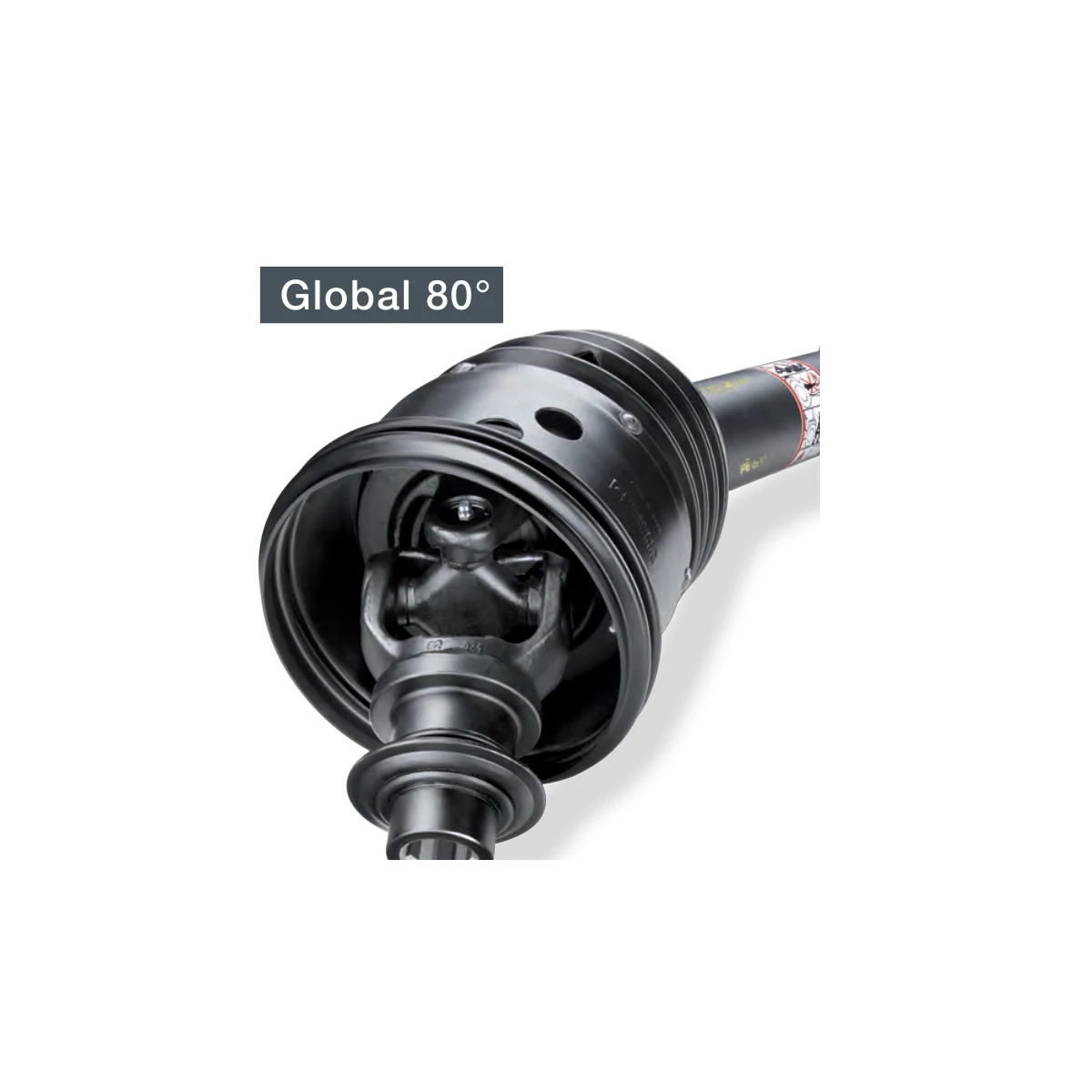
80 Degree Wide-Angle CV PTO Drive Shaft Global 80
Use the Global 80 family where a wide-angle CV head is needed together with the Global driveline architecture. Confirm tractor-side and implement-side orientation, full hitch sweep, shield cone clearance and the single-joint angle on the opposite end.
View technical evidence and selection notes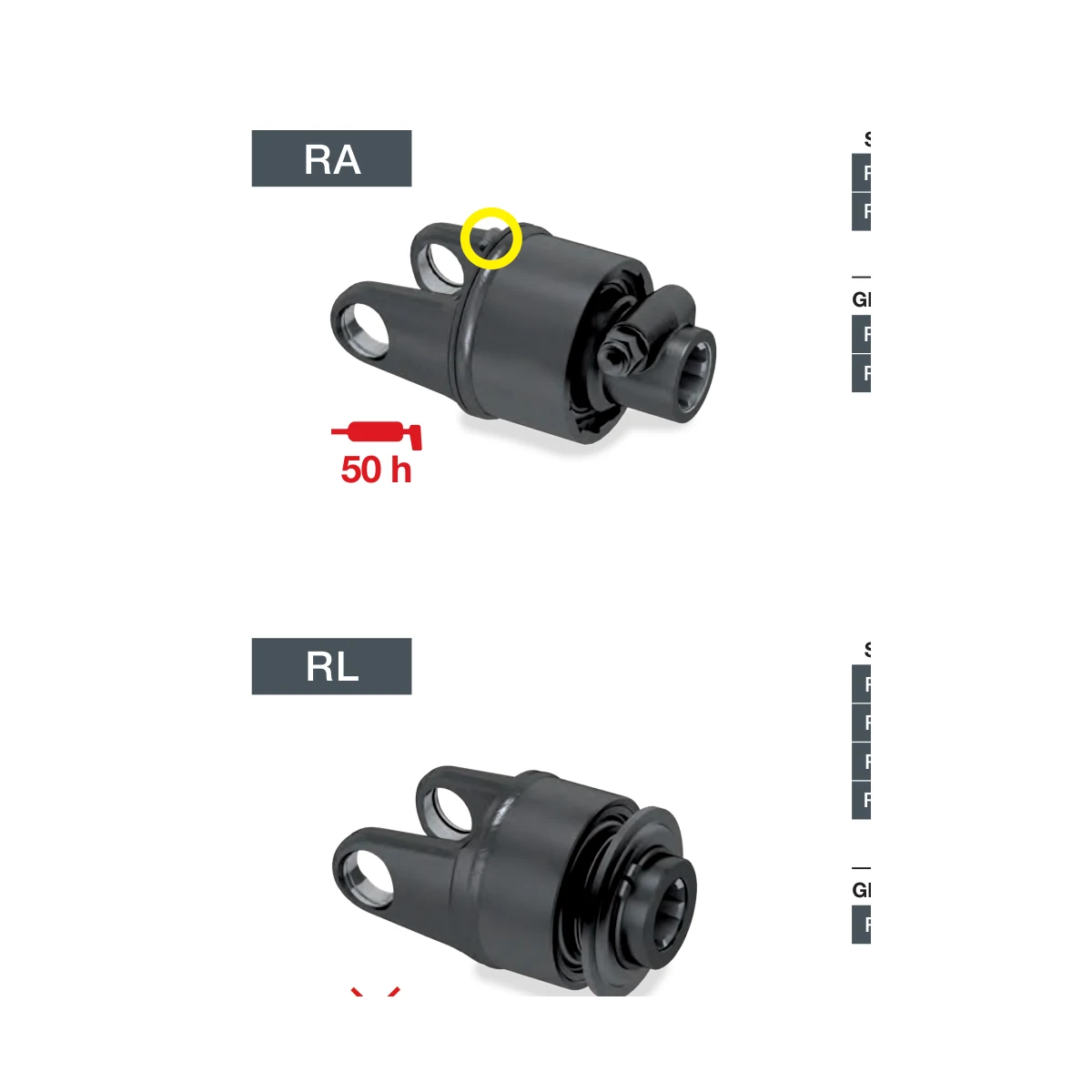
PTO Overrunning Clutch RA / RL
An overrunning clutch is selected when the implement has rotating inertia that can continue to drive the tractor-side driveline after PTO deceleration. Confirm the required freewheel direction, spline or yoke interface, torque level and whether the device is integrated with another limiter.
View technical evidence and selection notes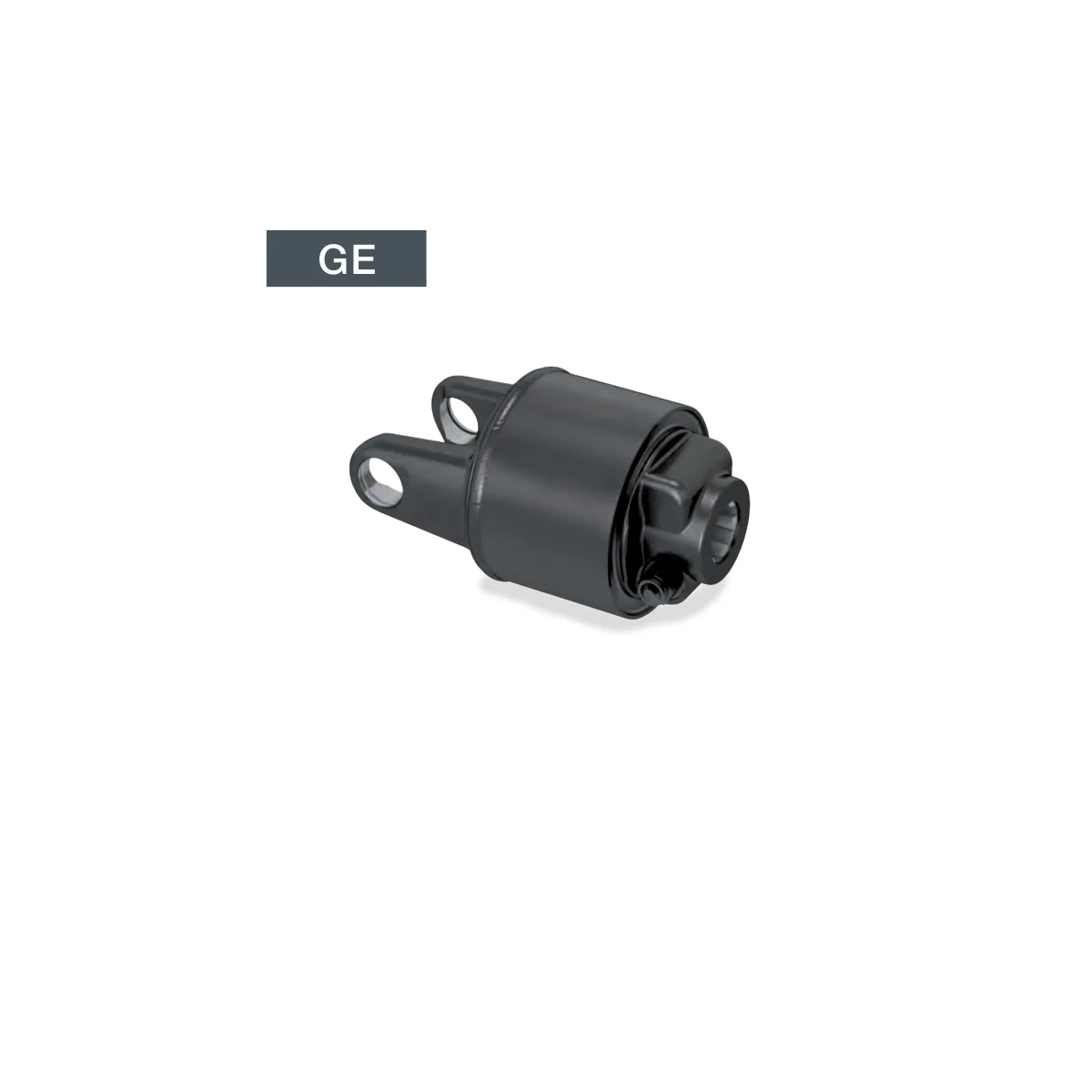
Torsionally Resilient PTO Joint GE
The GE joint is an application-specific torsional element rather than a generic substitute for every clutch. Selection requires an understanding of inertia, start-stop behaviour, pulsating torque, resonant speed zones and the driveline layout.
View technical evidence and selection notes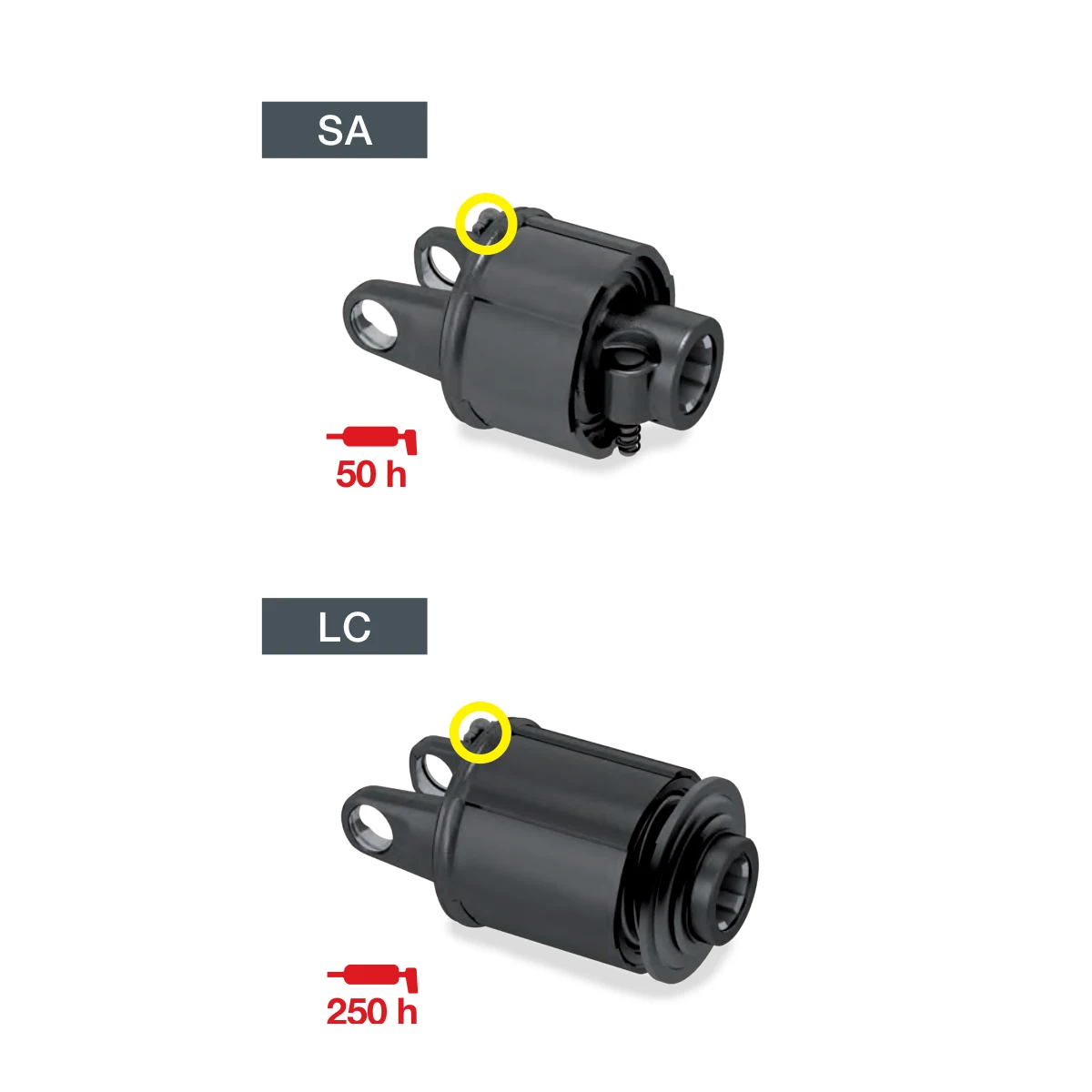
One-Way Ratchet Torque Limiter SA / LC
Ratchet limiters interrupt or ratchet when the transmitted torque exceeds the setting and automatically re-engage when the obstruction clears. Confirm one-way rotation, torque setting, operating speed, connection and the consequences of repeated cycling.
View technical evidence and selection notes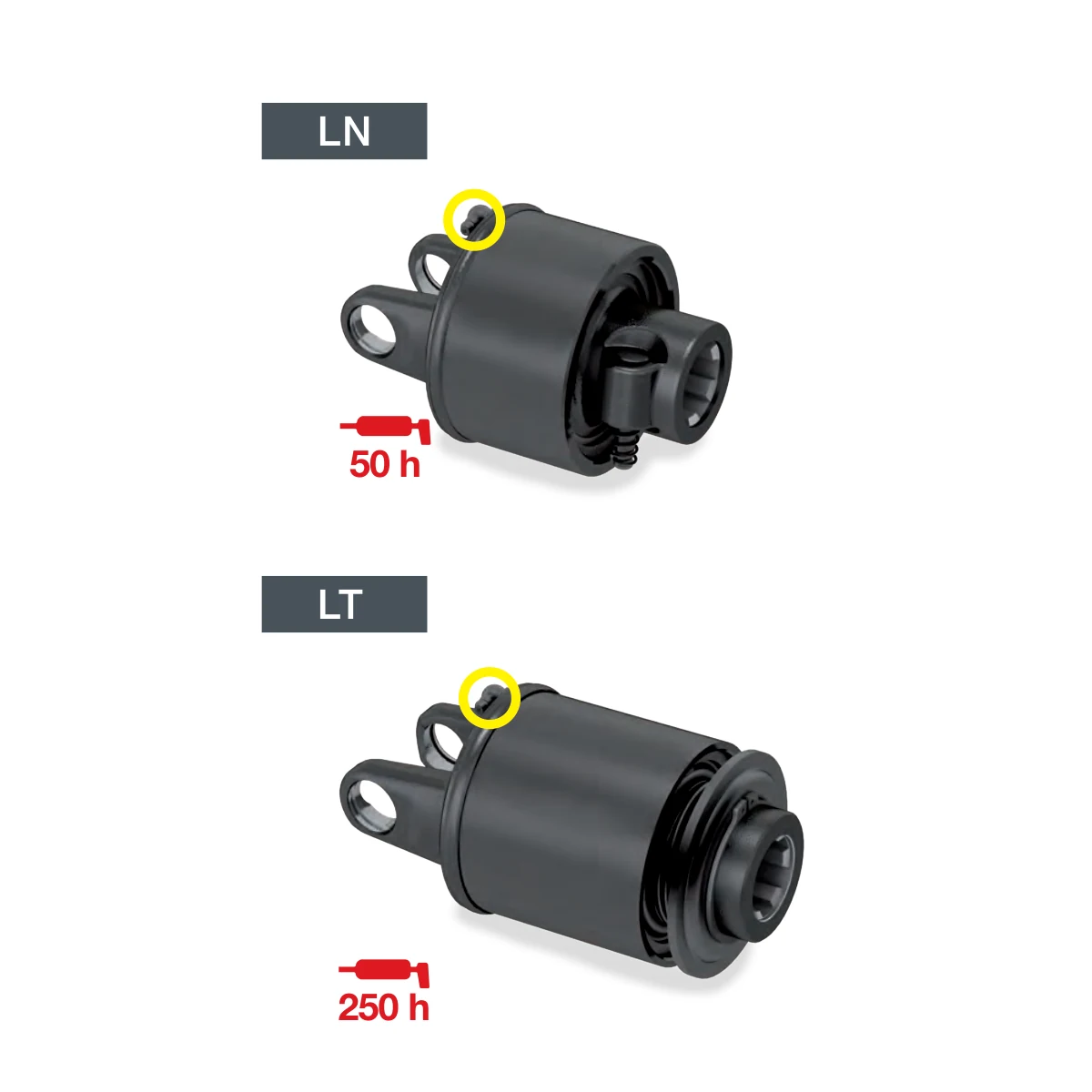
Symmetrical Ratchet Torque Limiter LN / LT
Use a symmetrical limiter when overload protection is required in both rotational directions. The reverse-duty requirement must be genuine and documented; it should not be assumed from an occasional manual reversal without checking the complete duty cycle.
View technical evidence and selection notes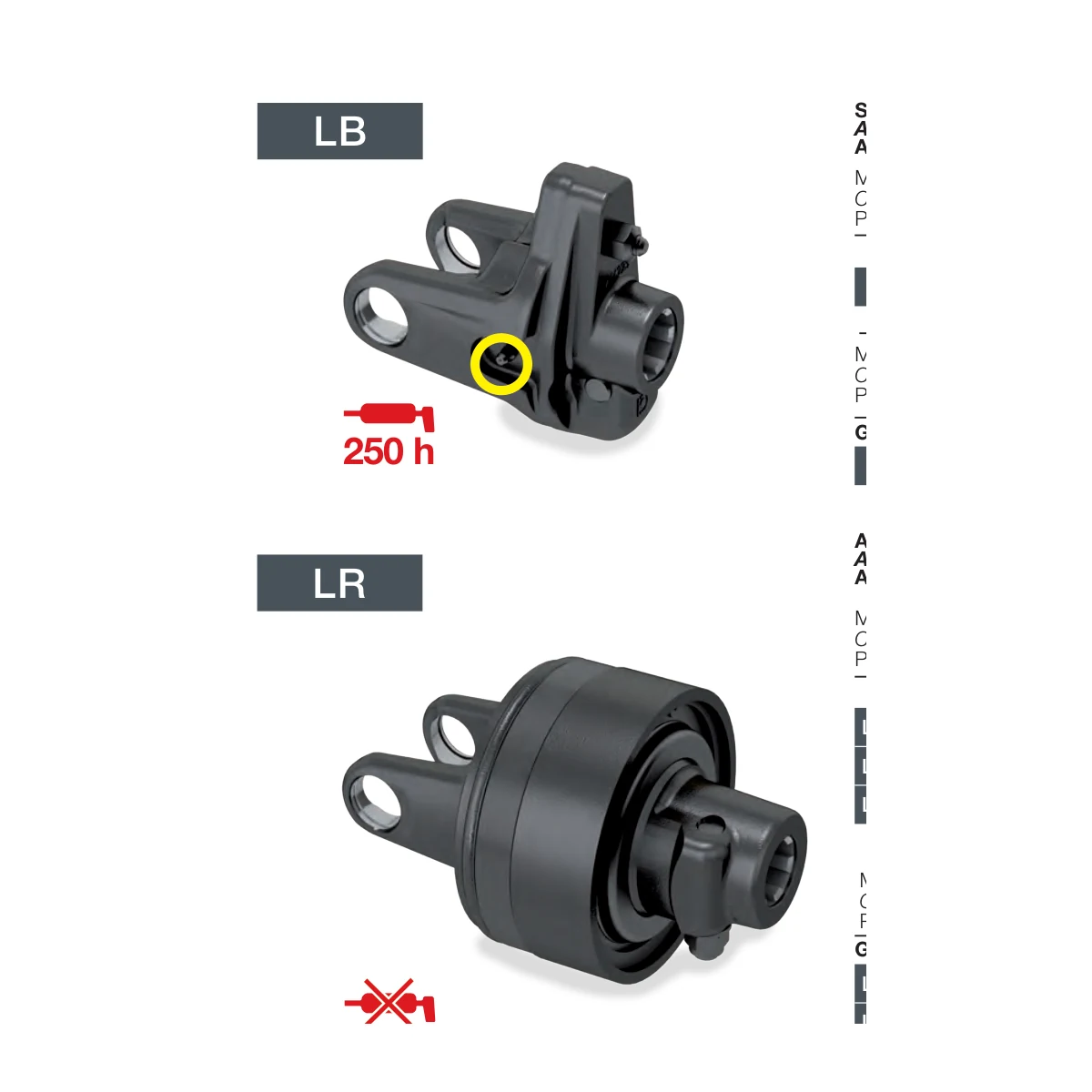
Shear-Bolt and Automatic Torque Limiter LB / LR
LB provides a sacrificial shear-bolt response, while LR interrupts above the setting and re-engages after speed reduction or stopping. Select based on the desired reset procedure, downtime tolerance, overload frequency and whether a predictable sacrificial fastener is preferred.
View technical evidence and selection notes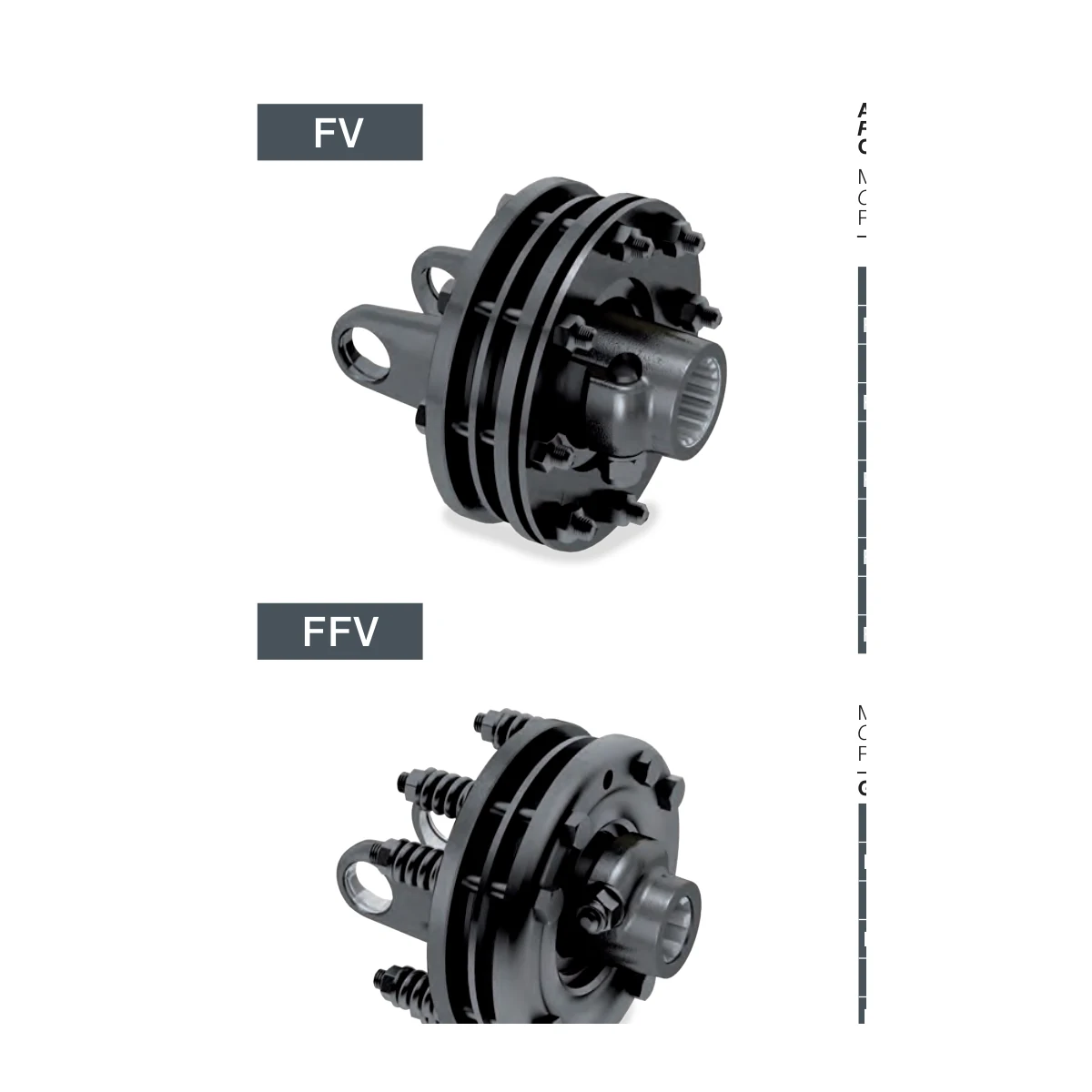
Adjustable Friction Torque Limiter FV / FFV
A friction limiter can absorb short torque peaks and allow controlled slip during an obstruction or high-inertia start. Selection must consider the desired slip torque, thermal energy per event, frequency of events, spring setting and recommissioning procedure after storage.
View technical evidence and selection notes